“When we put housing at the centre [of coalitions], we can also address other challenges including forced evictions and climate change.”
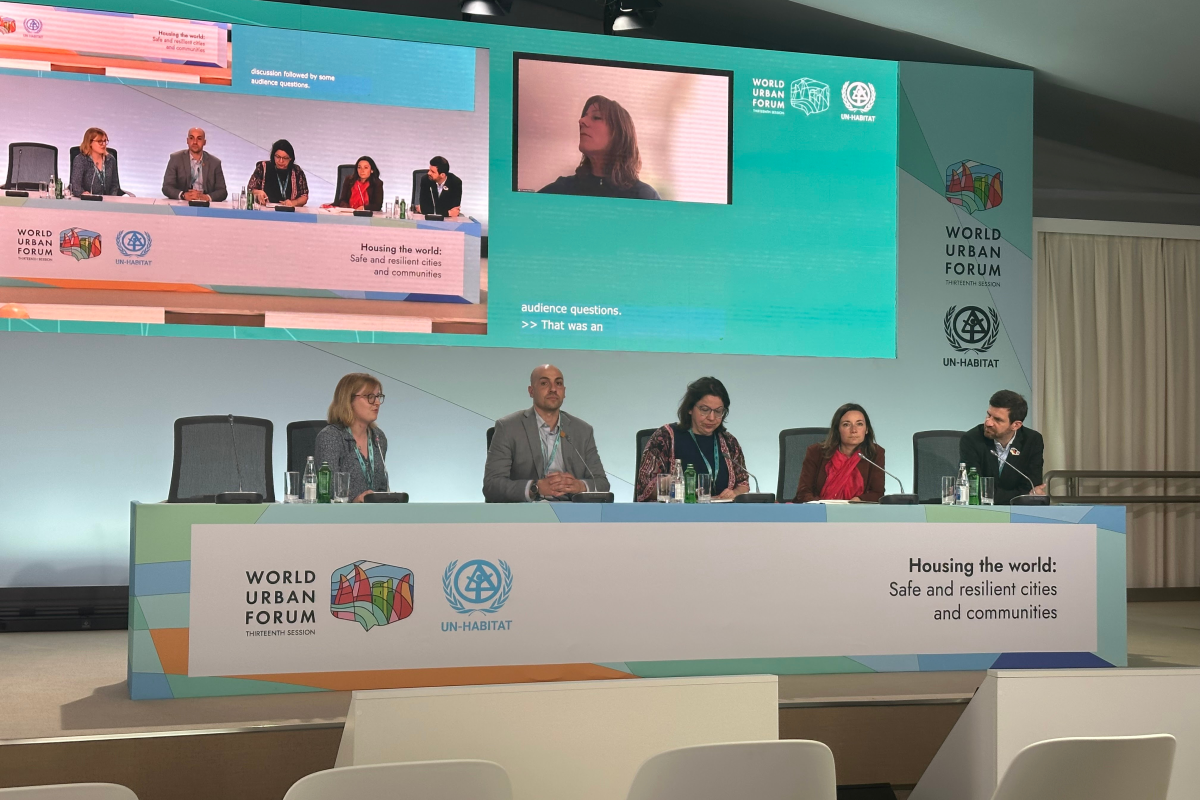
These were the words of Henrique Frota from HIC, speaking at the thirteenth session of the World Urban Forum (WUF), which I attended in Baku last month. By bringing together over 57,000 participants including government delegates, mayors, NGOs and civil society representatives, WUF sought to foster collaboration, strengthen connections, and propose tangible solutions to the global housing crisis.
With an estimated 330 million people experiencing homelessness and 1.1 billion people living in informal settlements, Henrique’s words were pertinent. To address the housing crisis, a coordinated, global response is needed – especially as deepening inequality, climate change and conflict continue to place more people at risk of experiencing homelessness and housing insecurity.
That’s why it was great to see the importance of global, multi-sector collaboration highlighted throughout the week. In one session, Jonathan Retford from Habitat for Humanity reflected that “housing is at the top of agendas globally, nationally and locally, but… is treated as domestic in nature and not a priority in international development.” His words parallel the findings of our recent report, which showed that a global cross-sector movement to include homelessness in development agendas would be transformative. It was refreshing to see the importance of these international coalitions emphasised on the global stage.
With COP-31 fast approaching, climate was also at the top of agendas throughout the conference. Climate change both drives and amplifies housing insecurity and homelessness, with discussions at WUF focusing on financing climate-resilient housing and the need to upgrade informal settlements. For those living in the Global South, the effects of the climate crisis are often felt more acutely, with the Zambia Homeless and Poor People’s Federation highlighting that the communities facing climate change’s direct impacts are often ignored or left out of policy discussions and National Adaptation Plans. Their motto, ‘nothing for us without us,’ is a powerful sentiment which has stayed with me, and one which should be heeded by governments and decision makers worldwide.
Despite acknowledgement of the challenges surrounding financing climate-resilient housing, discussions at WUF remained solutions-focused. Notable interventions included Slum Dwellers International’s call for informal settlement upgrading, including climate-resilient housing, to prevent evictions and ensure people can stay in their communities. Elsewhere, the Vienna Housing Model is a land fund used to purchase land specifically for affordable housing. Investing in social and affordable housing is vital to preventing and addressing homelessness, and there is much that we can learn from these initiatives.
WUF was also an opportunity to ensure that homelessness was part of the conversation – particularly important as a lack of genuinely affordable and accessible housing worldwide is driving homelessness. Alongside our strategic partners, the Institute of Global Homelessness, we participated in several sessions highlighting homelessness as a global issue which needs to be addressed. One session I facilitated, ‘From Definitions to Solutions: European and Global Approaches to Combat Homelessness’, brought together local, national and global perspectives on homelessness. It was inspiring to hear from André Riemer and Eiad El-Fateh about Germany and Canada’s respective approaches to addressing homelessness, and to hear from Regina Heibrock at the City of Karlsruhe about their municipal strategy. If we are to solve homelessness, there must be stronger alignment between local realities, city authorities, national policy and global frameworks, and the session was a space to facilitate that.
Reflecting on WUF, I was struck by the momentum behind implementing tangible, real-world solutions to the housing crisis. Yet it was also notable that homelessness remained low on the agendas of many present. We must keep momentum going to ensure that homelessness is spotlighted and specifically addressed at global forums. As we engaged in the Bonn Climate Conference (SB64) over the last two weeks, and looking towards COP31, there is a real opportunity to highlight the intersection between homelessness and climate change and ensure that those experiencing homelessness aren’t left out of policy discussions and climate financing. This is vital to ensuring that everyone, everywhere, has a place to call home.
Caitlin Disken, Communications Officer